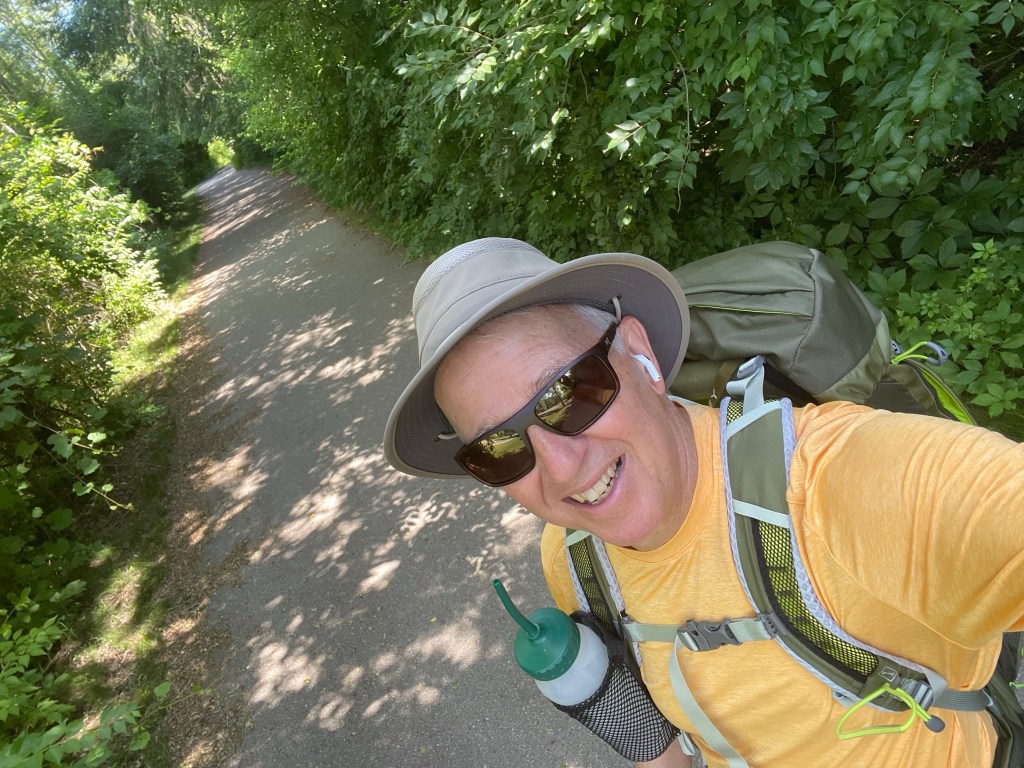
On the Camino, you set your own pace, and decide when you take breaks. This flexibility means that people of varying fitness levels can successfully complete the Camino.
But training is critical for two important reasons… your feet.
Blisters, shin splints and plantar fasciitis are the main reasons people are forced to quit their Caminos. Yes, you should train to get into good physical shape, but your primary goal is to prepare your feet and legs for the long hard grind. You may be an avid runner or cyclist, but if don’t put in miles walking, you can expect problems will surface when you’re on the trail.
And training your feet means you’re training your heart and lungs. It’s a win-win-win.
Bill’s Training Recommendations
| Common sense | Fitness can’t be gained over night. Start training for the Camino well in advance. Start walking distances consistent with your current fitness level, and then build up slowly over time. |
| Walk long back-to-back-to-back days. | Later in your training, you should try to simulate the Camino by walking several long days back-to-back. The more you do this, the better. |
| Walk longer than your expected longest day | If you expect to walk a 15 mile day on the Camino, then do one or two training days of at least 16-17 miles. This not only ensures you’re ready physically, but mentally. |
| Buy extra shoes | You need to train in the style of shoe you plan to wear, but that pair will be pretty worn down, so have a second pair you use for the Camino itself. Train in the second pair for a week or two, but keep them fresh. |
| Wear your pack. | Later in your training, incorporate walking with your fully loaded backpack. If you’re new to carrying a pack, you should probably do this for a few weeks. |
| Mix in some high intensity training. | On the Camino you’ll like be going up mountains or large hills. Unfortunately, for many people, it’s difficult to find hilly terrain for training at home. As an alternative, build in some training that raises your heart rate significantly, such as cycling or running. |
A suggested approach
In 2023, I walked the Camino with my sisters, both of whom were not long distance walkers. I suggested a training program for them, which they both followed religiously. After completing the Camino, they both said the training not only helped them feel more confident but also helped them enjoy the Camino more. Before they walked one step on the Camino, they knew they had the physical stamina to tackle a long day on the Camino.
I’m no expert on physical training, so you may want to find a program from a trained professional, but here’s what we used. When they started this, my sisters were not doing any long walks at all. If you’re already in good shape, or walk a lot, then you can start with higher mileage.
Assumptions:
- We had about 8 months to train (we started in January and did the Camino in September)
- Most of our Camino days would be 10-12 miles
- Our long walk on the Camino would be 15 miles
- They started at a moderate fitness (able to walk 30-60 minutes comfortably)
| Weeks Before Camino | Weekly Total Mileage | Long Walk | Notes |
| 36 | 11 | 3 | First month is about getting in the habit of walking |
| 35 | 11 | 3 | |
| 34 | 11 | 3 | |
| 33 | 12 | 4 | |
| 32 | 14 | 4 | |
| 31 | 15 | 5 | |
| 30 | 15 | 5 | |
| 29 | 17 | 5 | |
| 28 | 18 | 6 | |
| 27 | 18 | 6 | |
| 26 | 18 | 6 | |
| 25 | 18 | 6 | |
| 24 | 21 | 7 | |
| 23 | 21 | 7 | |
| 22 | 21 | 7 | |
| 21 | 22 | 8 | |
| 20 | 22 | 8 | |
| 19 | 24 | 8 | |
| 18 | 25 | 9 | |
| 17 | 25 | 9 | |
| 16 | 26 | 10 | Four months before their Camino, they were walking at least 10 miles once a week. |
| 15 | 26 | 10 | |
| 14 | 28 | 10 | |
| 13 | 28 | 10 | |
| 12 | 28 | 10 | |
| 11 | 28 | 10 | |
| 10 | 34 | 12 | |
| 9 | 34 | 12 | |
| 8 | 35 | 12 | |
| 7 | 38 | 14 | |
| 6 | 39 | 14 | |
| 5 | 42 | 12 | This week they did back-to-back-to-back walks of 10, 11 and 12 miles. (We should have done this two weeks, at least.) |
| 4 | 38 | 15 | |
| 3 | 39 | 16 | Their long walk this week was 1 mile longer than they expected any of their Camino walks to be. |
| 2 | 25 | 7 | |
| 1 | 0 | 0 | Took a rest week before we left to rest mind and body. |
Other thoughts:
- Log your mileage! This is a great way to stay on track, and to see progress. You’ll have more success if you have a simple log or spreadsheet where you track all your training.
- My sisters didn’t carry their backpacks on the Camino. If you are, I’d suggest mixing in some days carrying your fully weighted pack starting a couple months ahead of your Camino.
- If you have the time, I’d do more back-to-back long days than listed in this program.
- The earlier you start your training, the better. Not only will it build your confidence, it will help if you have a setback. For example, you may get injured during your training, and you’ll want time to fully heal. Starting early gives you time to take off a few weeks for rest, if needed.
- On the Camino, your daily hike isn’t your only walking. After you arrive in a town, you’ll want to walk to a restaurant and explore sites. If you’ve done enough training, you won’t be so tired or sore that you can’t comfortably walk around town.
- If you’ve never been to a podiatrist, consider visiting one well before your Camino. I did, and they fitted me with inserts that were helpful during my training and my Camino.
 Bill on the Camino